Exploring the Expansion of Gödel's Theorem in Multi-Dimensional Contexts
Predict the future
Knowledge-Producing Systems as Hybrid Dynamical Processes
A Speculative Framework and Research Programme
Miklós Róth — Roth Complexity Lab, Budapest Working paper ·
Epistemic status (read first). This is a speculative position paper, not a proof, a theorem, or an extension of Gödel's incompleteness theorems. It proposes an analogy — that the historical development of formal, scientific, and machine-learning systems may be fruitfully described using the vocabulary of hybrid dynamical systems and critical transitions. The mathematical objects below (the state variables, the ratio Ω, the coupled equations) are presented as conceptual constructs and conjectures, not as operationalized, computable, or validated quantities. Where the framework borrows technical machinery (proof-theoretic ordinals, impulsive systems theory, early-warning signals), it borrows it as metaphor and motivation unless explicitly stated otherwise. The paper's claim to usefulness rests on whether the analogy organizes thinking and generates testable conjectures — in the spirit of a Lakatosian research programme — not on any claim to have formalized incompleteness. Sections 5–6 state plainly what is not established and what would be required to make it so.
Abstract
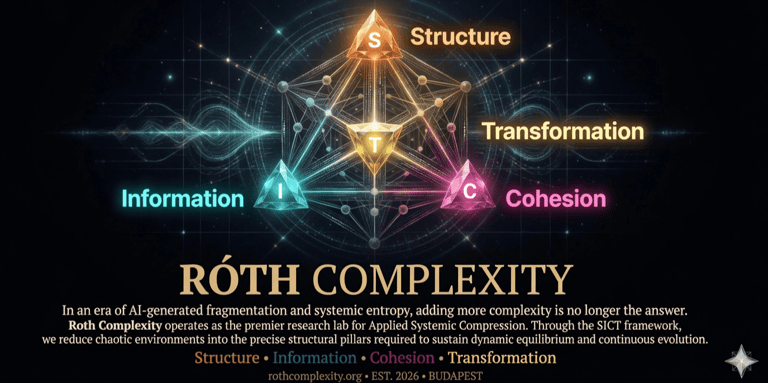
Gödel's incompleteness results are often read as fixed ceilings on formal knowledge. This paper explores a different, deliberately informal reading: that incompleteness can be narrated as a recurring driver of structural change in knowledge-producing systems, which periodically reorganize into higher-capacity representations. We sketch a four-variable descriptive vocabulary — Structural capacity (S), Information load (I), Coherence (C), and Transformational pressure (T) — and a heuristic stability ratio Ω, and we draw analogies between (a) crises and paradigm shifts in science, (b) reflection-based extension in proof theory, and (c) reported "emergence" and degradation phenomena in large language models. We are explicit that this is an analogy in search of a formalization. We present the strongest objections to it, the ways it could be wrong, and a concrete programme by which it could be made rigorous or falsified. The contribution, if any, is conceptual and organizational, not mathematical.
1. Motivation and scope
A persistent intuition across logic, the history of science, and recent machine learning is that systems which generate knowledge do not improve smoothly forever inside a fixed frame; they accumulate strain and occasionally undergo abrupt structural reorganization. Kuhn described this in science as the movement from normal science through crisis to revolution. Proof theory describes how a consistent theory cannot establish its own consistency and is extended by reflection principles into a strictly stronger theory. Recent work on large language models reports both apparently discontinuous capability gains with scale and characteristic failure modes (incoherent long reasoning chains, hallucination under load).
This paper asks a single, modest question: is there a common descriptive vocabulary — drawn from dynamical-systems theory — that usefully captures the shared shape of these episodes? We emphasize descriptive and useful. We are not claiming a unifying law, and we are certainly not claiming to extend or improve Gödel's theorems, which are settled mathematics. We are proposing a lens and asking whether it earns its keep.
2. A four-variable descriptive vocabulary
We propose describing a knowledge-producing system by four loosely-defined quantities. These are conceptual constructs; Section 5 addresses the (unsolved) problem of operationalizing them.
S — Structural capacity. The expressive/representational power of the current frame. Analogues: the consistency strength or proof-theoretic ordinal of a formal theory (metaphor only — see §5.1); the mathematical formalism a scientific paradigm can express; effective reasoning depth in a model.
I — Information load. The descriptive burden the system carries. Analogues: description length of axioms-plus-theorems; volume of accumulated observations and anomalies; context length or parameter count.
C — Coherence. The degree to which the system's contents mutually support one another and resist contradiction. We borrow the idea (not a computation) from Thagard's connectionist account of explanatory coherence as constraint satisfaction.
T — Transformational pressure. The rate at which the system generates or encounters items it cannot integrate: undecidable propositions, paradoxes, anomalies, out-of-distribution inputs.
A heuristic stability ratio. As an organizing intuition only, we write
Ω ≈ (S + C) / (I + T)
to express the qualitative claim that capacity and coherence stabilize a system, while load and unintegrated pressure destabilize it. We stress that, as written, Ω is not a computable quantity — its four terms have no shared units (§5.2). It should be read as a slogan for a hypothesis, not as an equation to be evaluated.
The hypothesis the slogan encodes: when capacity and coherence comfortably exceed load and pressure, the system is in a stable "normal" regime; when load and pressure grow without a commensurate increase in capacity, the system approaches an instability and must either reorganize or degrade.
3. The analogy to critical transitions
A substantial empirical literature (Scheffer and colleagues, across ecology, climate, and physiology) shows that many systems approaching a tipping point exhibit early-warning signals — notably critical slowing down: rising variance and autocorrelation as the system recovers ever more sluggishly from perturbations.
The conjecture this paper offers is that analogous signatures might be observable in knowledge systems near reorganization: a paradigm in crisis takes longer and longer to absorb each new anomaly; a model near the limit of its effective capacity produces longer, less-convergent reasoning before failing. We label this an analogy and a conjecture, because — unlike the ecological case — we do not yet have agreed-upon, measurable time series for "scientific coherence" or a validated mapping from "reasoning-chain divergence" to a control-theoretic bifurcation. Establishing such measurements is precisely the open problem (§6).
4. Reorganization as a discrete event
When a system can no longer maintain coherence within its frame, the resolution historically takes the form of a discrete structural change rather than a smooth deformation: adopting a new axiom or reflection principle; adopting non-Euclidean geometry; adding an architectural module or an inference-time scaffold (chain-of-thought, verification loops, multi-agent debate). We denote such a reorganization Φ and describe it informally as embedding the prior frame into a higher-capacity one.
This motivates the language of hybrid dynamical systems — continuous evolution within a mode, punctuated by discrete jumps between modes. We are careful here: invoking this language is not the same as constructing a hybrid automaton with proven stability properties for the present system. We have not done that (§5.3). We claim only that the picture — long stretches of continuous accumulation punctuated by structural resets — is suggestive and worth formalizing.
A speculative corollary, offered as a conjecture rather than a result: if increasing structural capacity tends to increase a system's capacity for self-reference, and self-reference tends to generate new internal pressure (new undecidables, new self-models that surface new anomalies), then no single frame is permanently stable. Reorganization would be recurrent rather than terminal. This is a narrative consistent with the open-ended history of mathematics and science; it is not a theorem about minds or machines, and we explicitly disclaim the Lucas–Penrose conclusion that incompleteness places minds beyond mechanism (a position we regard as unsupported and contested).
5. What is not established (limitations)
This section is the heart of the paper's honesty.
5.1 The proof-theory mapping is metaphorical. Proof-theoretic ordinals are order types, not real numbers; "dS/dt" where S is an ordinal is not defined. The connection to Beklemishev's iterated-reflection analysis is inspirational, not mathematical. Any claim that the framework "formalizes" or "extends" results in proof theory would be false.
5.2 Ω is not computable as written. S, I, C, and T have no common units and no agreed measurement procedures. The ratio is a mnemonic for a qualitative hypothesis, not a quantity. Presenting it as an "order parameter" in the statistical-mechanics sense would be unjustified without deriving it from a specified energy or free-energy functional, which we have not done.
5.3 The dynamical equations are underspecified and therefore unfalsifiable as stated. Any coupled-ODE version of this framework contains free functions (e.g., terms standing in for "anomaly generation," "explanatory unification," "self-reference"). Until these are pinned to specific, independently-motivated forms, the system can be tuned to reproduce almost any trajectory and predicts nothing risky. A model that cannot fail cannot be confirmed.
5.4 No theorem, simulation, or data is presented. The technical apparatus of impulsive/hybrid systems theory (finite-time Lyapunov stability, Poincaré return maps, dissipativity) is referenced for its vocabulary. No stability result is proved for any instance of this framework, and no empirical time series is analyzed. Those remain to be done.
5.5 The LLM "emergence" reading is contested. The interpretation of scaled capability jumps as genuine phase transitions is directly challenged by work (Schaeffer et al.) arguing such jumps can be artifacts of discontinuous metrics. A defensible version of this framework must engage that critique on its merits rather than assume the phase-transition reading.
6. How this could be made rigorous — or shown false
A genuine research programme states how it could lose. We propose the following, roughly in order of cost:
Operationalize one variable, in one domain. Pick LLM inference. Define C as a concrete, measurable coherence/factuality score over a reasoning trace, and T as a measured input-difficulty distribution. Drop the ordinal interpretation of S entirely; use a measurable proxy (e.g., effective context utilization).
Specify the dynamics fully and simulate. Replace every free function with an explicit, justified form. Simulate. Report whether the model reproduces and predicts phenomena it was not fit to — e.g., the onset of reasoning-chain divergence — and publish the cases where it fails.
Test the early-warning conjecture empirically. On real reasoning traces near failure, measure variance and autocorrelation of a coherence proxy. The framework predicts critical-slowing-down-like signatures; their absence would be evidence against it.
Engage the counter-literature directly. Show whether observed jumps survive the Schaeffer-style metric critique. If they do not, the "phase transition" language must be retired.
Submit to qualified, adversarial review — proof theorists for the logic claims, dynamical-systems researchers for the math, ML researchers for the LLM claims. Treat hostile feedback as the point, not a setback.
If steps 1–4 fail, the honest conclusion is that the framework is a generative metaphor with pedagogical value but no predictive content — which is a perfectly respectable thing to be, provided it is labeled as such.
7. What the framework is good for today
Pending the above, the defensible contributions are:
A communication and diagnostic lens. The Ω intuition — capacity and coherence versus load and pressure — is a usable heuristic for reasoning about organizational and technological fragility under accelerating change, including AI adoption. Used as a lens, with no quantitative pretensions, it has real explanatory and rhetorical value.
A frame for interdisciplinary synthesis. It connects literatures (proof theory, philosophy of science, complex systems, ML) that rarely sit together, which can seed genuine questions.
These are honest claims. The paper makes no others.
8. What We Propose
We have proposed describing knowledge-producing systems as undergoing long continuous accumulation punctuated by discrete reorganizations, and offered a four-variable vocabulary and a stability slogan to organize that description. We have been explicit that this is analogy and conjecture, that its central quantities are not yet operationalized, that its equations are not yet falsifiable, and that its most striking application (LLM emergence) is contested. The value of the proposal, if it has any, is as a research programme: a source of testable conjectures and a lens for synthesis. Whether it graduates from metaphor to model is an empirical question we have tried to state honestly rather than answer prematurely.
References (indicative)
Beklemishev, L. D. (2003/2004). Proof-theoretic analysis by iterated reflection. Archive for Mathematical Logic.
Gentzen, G. (1936). Die Widerspruchsfreiheit der reinen Zahlentheorie. Mathematische Annalen.
Gödel, K. (1931). Über formal unentscheidbare Sätze der Principia Mathematica und verwandter Systeme I.
Haddad, W. M., Chellaboina, V., & Nersesov, S. G. (2006). Impulsive and Hybrid Dynamical Systems. Princeton University Press.
Kuhn, T. S. (1962). The Structure of Scientific Revolutions.
Lakatos, I. (1978). The Methodology of Scientific Research Programmes.
Lucas, J. R. (1961). Minds, Machines and Gödel. Philosophy. (cited as a position the paper declines to endorse)
Penrose, R. (1994). Shadows of the Mind. (cited as contested)
Scheffer, M., et al. (2009). Early-warning signals for critical transitions. Nature, 461.
Schaeffer, R., Miranda, B., & Koyejo, S. (2023). Are emergent abilities of large language models a mirage? NeurIPS.
Thagard, P. (1989). Explanatory coherence. Behavioral and Brain Sciences, 12(3).
Turing, A. M. (1936). On computable numbers, with an application to the Entscheidungsproblem.
Wei, J., et al. (2022). Emergent abilities of large language models. Transactions on Machine Learning Research.
Note: references are indicative of the literature the programme must engage. Several were chosen specifically because they constrain or challenge the framework (Schaeffer et al.; the contested status of Lucas/Penrose), not only because they support it.




Introduction to Gödel's Theorem
Gödel's Incompleteness Theorems fundamentally changed the landscape of mathematics and logic by demonstrating the inherent limitations of formal systems. Initially formulated in the early 20th century, these theorems reveal that any consistent formal system capable of expressing arithmetic cannot prove all truths about the arithmetic's properties. As society evolves, so too does the interpretation and application of these profound concepts. This paper looks beyond classical frameworks, venturing into multi-dimensional thought experiments to expand the implications of Gödel's Theorem.
Understanding Multi-Dimensional Layers
Multi-dimensional thought experiments allow us to conceptualize mathematical truths in a more complex framework than traditional one-dimensional or even two-dimensional models. In this space, each dimension represents a different set of axioms or logical rules which interact with one another. By utilizing these layers, we can scrutinize the ramifications of Gödel's Theorem across diverse mathematical paradigms, each potentially yielding unique contradictions or validating principles of consistency.
Expanding Gödel's Theorem: A Thought Experiment
Imagine a universe where we implement Gödel's reasoning within a three-dimensional space, where mathematical truths not only comport to linear progression but also reflect non-linear interdependencies. For instance, consider a scenario where new axioms are introduced in the second layer that impact reasoning within the first layer. This could lead to new hierarchies of knowledge, prompting questions about what constitutes proof across dimensions.
As we dig deeper, we can introduce higher dimensions—four, five, or even more—each comprising unique mathematical operations and rules. This complexity forces us to reassess the definition of completeness. Can there exist a definitive truth across all dimensions, or do contradictions multiply as layers increase? This thought experiment embodies Gödel's warnings about limitations; every new level we explore reveals yet another layer of unsolvable questions.
Utilizing computational mathematics, we might simulate interactions between these layers, generating insights that illuminate the paradoxes inherent in mathematical systems while embracing the vast unknown. This exploration of multi-dimensional spaces could lead to advancements not only in pure mathematics but also in applied fields such as computer science, physics, and even philosophy.
The expansion of Gödel's Theorem into multi-dimensional layers serves as a profound thought experiment to challenge existing paradigms in mathematics and logic. It encourages exploration comprehensively, emphasizing how complex structures can unveil additional truths while simultaneously concealing further unknowns. Ultimately, Gödel's insights remind us that the quest for knowledge is an infinite journey—one that we can navigate across any number of dimensions.
Contact
Reach out for insights or collaboration.
© 2025. All rights reserved.
Phone